On Awe - Shelley, Philosophy and the Plea for Beauty.
It is often argued that poetry has no place in philosophical discourse, as analytic philosophy becomes more mathematical and technical, positioning itself within logic and rigour, far removed from beauty. Romantics are seen as unnecessary, word bloat; to aestheticise yourself is only to harm your argument. Philosophy is not seen as an endeavour towards beauty, nor is it teleological or aimed at transcending the bounds of human cognition and finding something greater than yourself. This shift is warranted, expected, given the course of history, science superseded the need for philosophy in answering questions of reality, and philosophy found its home within logic, mathematics, and rigorous questioning of intangible questions. This is not an inherent fault, as the majority of philosophy need not be beautiful at least within discussing amongst fellow experts: Whether I describe possible worlds, or a structuralist view of mathematics with glowing metaphors and rhetoric is unnecessary, I must be succinct in my enquiry to be as persuasive as possible, and drive my point home using logic.
I am privy to this method, as evidenced by my analytic works; however, there are many areas of philosophy where beauty can be afforded, but also demands that it be encouraged. The realms of aesthetics, cultural analysis, existentialism, philosophy of art (whether music, literature, poetry), and any religious exposition of the world ought to be beautiful not only to encapsulate readers, but as these endeavours are inherently emotional ones, and to feel the ache of the philosopher is to understand the reason of their mind. Lately, I have been grappling with existential thoughts. I had long considered myself a materialist agnostic. I did not perceive much of divinity, nor did I have any notion of God. Yet I have always, over the course of my life, been left in awe at the beauty, scope, and wonder of the universe. A feeling so intensely emotional I have been brought to tears, my cliffsides, rainbows over mountains, sat in the Pyramid of Khafre and cried at the beauty that encapsulated me, and this belief was inherently divine.
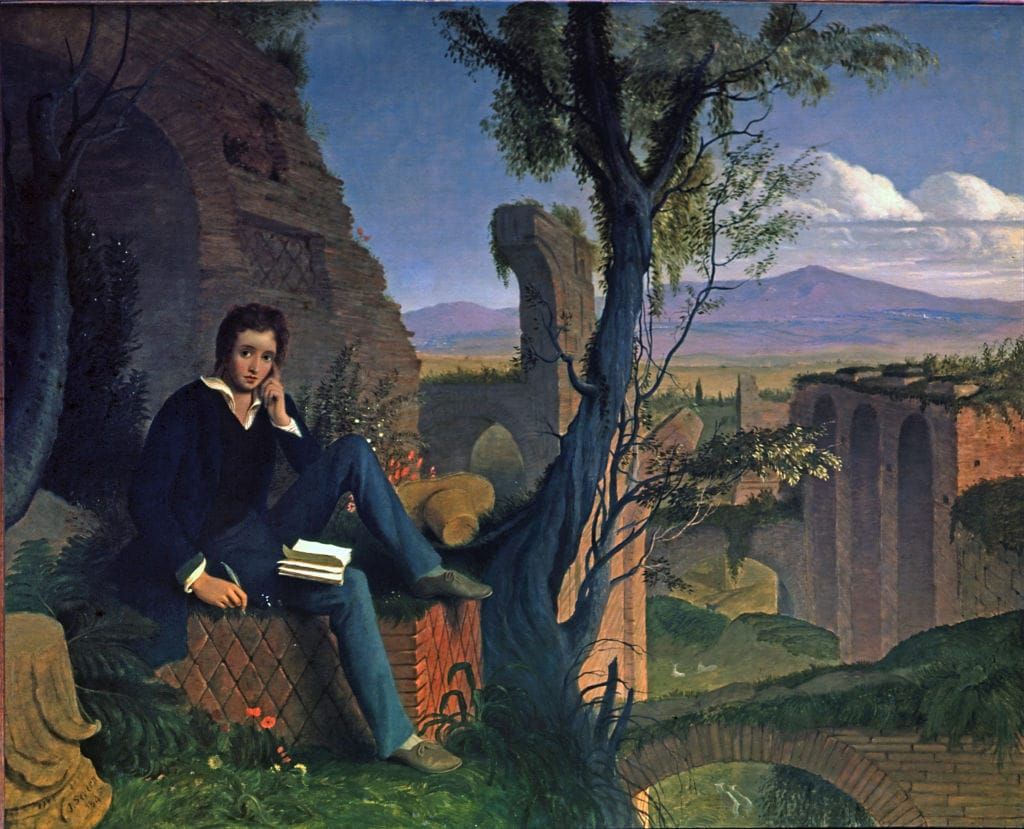
I never viewed it as such, but the more I thought of it, the more I realised a mystical part of my soul lay dormant. I became less obsessed with scientific realism, more sceptical of "rationalist" interpretations of the world, and became enamoured with the role of perspective in ontological enquiry. It can be said that I am now a pantheist, or a mystical materialist as dubbed by Žižek, but I separate my analyses of ontology from perspective, and from mind-independent analysis. This is something I shall write on in due course, and will not discuss at length here, but do I truly think the universe is a divine, beautiful encapsulating entity? Likely not, I am aware of the studies of quantum mechanics, all the scientific explanations we have of such "amazing" phenomena, but in relation to the scope and limited nature of my mind, it is indeed beautiful, and to me, without a doubt divine. So, I can be called a natural pantheist. Mixing scientific grounding with a personal reverence for the universe as the ultimate, divine identity, where I can experience awe and wonder through observing the cosmos, and hiking across mountains, without making any baseless metaphysical assertions. I have long searched for the best way to explain this, and for the first time in my life, I have found my exact intuitions encapsulated far better than I ever could, by someone else. Percy Bysshe Shelley and his Hymn to Intellectual Beauty. Today, in this short piece, I will analyse this poem and explain why I find it to represent my worldview, then discuss the power of mixing poetry and literature, amidst an elaborate philosophical stance.
The awful shadow of some unseen Power
Floats though unseen amongst us,—visiting
This various world with as inconstant wing
As summer winds that creep from flower to flower,—
Like moonbeams that behind some piny mountain shower,
It visits with an inconstant glance
Each human heart and countenance;
Like hues and harmonies of evening,—
Like clouds in starlight widely spread,—
Like memory of music fled,—
Like aught that for its grace may be
Dear, and yet dearer for its mystery
Shelley opens with an unseen power, with a consistent metaphor of a shadow, representing its invisibility and inevitability. The word power is capitalised, but this entity has no face, no location, no boundaries; it is omniscient. Yet it does not exist above humanity, but enmeshed in all present life, in flowers, hearts, harmonies of the evening, clouds, music, and every single bit of life on earth. Shelley effectively equates the sensory with the sacred, a common tenet in pantheism, that the force of life itself is what is divine, not a present or humanistic God.
Spirit of BEAUTY, that doth consecrate
With thine own hues all thou dost shine upon
Of human thought or form,—where art thou gone?
Why dost thou pass away and leave our state,
This dim vast vale of tears, vacant and desolate?
Ask why the sunlight is not forever
Weaves rainbows o'er yon mountain river,
Why aught should fail and fade that once is shown,
Why fear and dream and death and birth
Cast on the daylight of this earth
Such gloom,—why man has such a scope
For love and hate, despondency and hope?
Here, Shelley deliberately addresses the power as the Spirit of Beauty, and it consecrates everything that it shines upon, both in human thought and in the natural form of nature. Shelley asks throughout this stanza, why does beauty fade, and why must death and birth shadow life? Yet he poses these questions towards nature and the entity itself, rather than to God, who might answer through revelation or through scripture. The natural world of rainbows, daylight, and mountain rivers is both the site and stem of his laments, yet the only medium through which this all-powerful entity might answer. Pantheism's epistemology is grounded in the fact that nature is the only text available to us, not God, the Bible, or any ultimate answer, just the forces of life that we may witness.
No voice from some sublimer world hath ever
To sage or poet, these responses given—
(Therefore, the name of God and ghosts and Heaven),
Record their vain endeavour.
Frail spells—whose uttered charm might not avail
(Doubt, chance, and mutability.)
Thy light alone—like mist o'er mountains driven,
Or music by the night wind sent
Through strings of some still instrument,
Or moonlight on a midnight stream,
Gives grace and truth to life's unquiet dream.
This is the most explicit rejection of orthodox religion, to no surprise to anyone acquainted with Shelley, as his atheism is one of the most notable parts of his philosophical positions. Shelley dismisses the names of Gods, Ghosts, and heavens as vain endeavours and frail spells whose charm will not succeed. It is an attempt to articulate the Power foolishly. He argues that supernatural frames cannot resolve doubt, chance, mutability, but what truly can is the immanent light itself, described again through purely natural mages: mist, music upon the night wind, and moonlight on a midnight stream.
Love, Hope, and Self-esteem, like clouds, depart
And come, for some uncertain moments lent.
Men were immortal and omnipotent,
Didst thou, unknown and awful as thou art,
Keep with thy glorious train, firm state within his heart.
Thou messenger of sympathies,
That wax and wane in lovers' eyes—
Thou—that to human thought art nourishment,
Like darkness to a dying flame!
Depart not as thy shadow came,
Depart not—lest the grave should be,
Like life and fear, a dark reality.
The Pantheist undercurrent throughout this poem becomes explicitly obvious here; what would make humanity "immortal and omnipotent" is grounded in the Power maintaining its presence in the human heart, both in emotion and in physicality. The divine, human, and natural all interpenetrate with a complete lack of hierarchical structure. Shelley's existential laments are met with adorned affection for everything natural. The infinite expresses itself throughout our finite minds, and those minds are elevated and loved from that immanent expression. The power shall not salvage us, nor shall it prove its worth to us; it is only visible from interior illumination, love, hope, self-esteem, art, philosophy, poetry, every manner of beauty you may think of, is dependent on the mercy of the power. Recall my mention of feeling completely at the mercy of the universe.
While yet a boy, I sought for ghosts, and sped
Through many a listening chamber, cave and ruin,
And starlight wood, with fearful steps pursuing
Hopes of high talk with the departed dead.
I called on poisonous names with which our youth is [fed],
I was not heard—I saw them not—
When musing deeply on the lot
Of life, at that sweet time when winds are wooing
All vital things that wake to bring
News of buds and blossoming,—
Suddenly, thy shadow fell on me;
I shrieked and clasped my hands in ecstasy!
Shelley writes about how, as a boy, he sought refuge and knowledge through supernatural means, in religion, in Ghosts, rituals and esoterica, yet he found nothing but silence. Similar to Plato's allegory of the cave and theory of the forms, he only ascertained the Power when he stopped seeking knowledge through ideology and doctrine, and instead opened himself to the natural world: hence, he talks of winds, buds, and blossoming of flowers. This epiphany is triggered by spring itself, often seen in poetry as the season of rebirth, reinvention, youth, and revelation as the death of winter is whisked away. This is a perfect account of a pantheist "religious" awakening, where one stops seeking answers in doctrines and religions, whether science, Abrahamic, or pagan religions. The revelation of the sacred powers exists in attentive immersion in the world's own vitality and overwhelming beauty.
I vowed that I would dedicate my power
To thee and thine—have I not kept the vow?
With a beating heart and streaming eyes, even now
I call the phantoms of a thousand hours
Each from his voiceless grave: they have in visioned [bowers]
Of studious zeal or love's delight
Outwatched with me the envious night—
They know that never joy illumined my brow
Unlinked with hope that thou wouldst free
This world from its dark slavery,
That thou—O awful LOVELINESS,
Wouldst give whate'er these words cannot express.
Here, Shelley's vow can seem religious, an oath to a transcendent entity. But I choose to interpret it as a vow I have taken myself, a philosopher's duty to the immanent principle of beauty and truth, dedicating oneself to understanding and digesting both. The capitalisation of LOVELINESS is extremely significant; it is the manifestation of the aesthetic and moral intensity that underlines all of Shelley's life's work. Within this framework, his political opinions exist too. I tie a hope that the Power would free "this world from dark slavery" effectively ties his pantheism to social liberation. If the Power is divine, and the Power is in everyone, systems of oppression, whether religious or political, are violations and effective suppressions of the divine entity itself.
The day becomes more solemn and serene
When noon is past, there is a harmony
In autumn, and a lustre in its sky,
Which, through the summer, is not heard or seen,
As if it could not be, as if it had not been!
Thus let thy power, which like the truth
Of nature on my passive youth
Descended, to my onward life supply
It's calm—to one who worships thee,
And every form containing thee,
Whom, SPIRIT fair, thy spells did bind
To fear himself, and love all humankind.
The final stanzas' analogy to autumn is one of the more poignant ones in the poem, as the acceptance of the revelation, spelt out from spring onto summer, is found in the quiet of autumn. The maturity of one's thoughts and the acceptance of these pantheist ideals come after the blissful, all-encompassing emotions Shelley experienced in the changing of seasons. Now he calmly understands the SPIRIT, whose capitalisation is also important, and now, with the acceptance of these ideals, he can truly love and find peace in all humankind.
This poem elegantly articulates all of the feelings I had in my intellectual path to Pantheism; Shelley articulates in a mere page what an analytic philosopher would explain in 60 pages, embedded in deep metaphysical justifications, articulations and all sorts of thought experiments. This is not to say that those papers are bad, but merely that a variety should be considered. If your aim as a philosopher is to influence thought outside of the sphere of academia, writing in an accessible way is undoubtedly required. While I can justify pantheism and all the emotions I felt towards the universe and the divine in Classical Elementary Logic (and I actually did, and almost put it here in this piece to demonstrate it, but ultimately decided that was pointless!), it lacks the emotional background of such a beautiful experience.
I cannot, in ruthless analytical tone, articulate the feeling I had in February, as I walked the shores of Salcombe and stared off into the vast, all-encompassing sea, and felt the overwhelming urge to ask it to swallow me. I cannot articulate in logic the feeling I had, as I sat in Dartmoor alone as my friends slept, lying on the grass in the depths of night, as I gazed upon a night sky so densely lit that I could not even see a singular dark spot. As I saw what felt like every single star in the Milky Way, I could not help but think about perspective. About how I was likely gazing upon stars that died thousands of years ago, and the fact that time is not at all linear, but purely dependent on perspective, that if an alien species from 2000 years ago managed to gaze upon the earth, they would see a planet inhabited by Ancient Civilizations of all sorts, a form of eternal life via perspective. Our camp was nestled between several valleys, atop the nearest mountain sat a solitary inn at the highest altitude in the UK, the hills were filled with the red hue of the various sundews and sphagnum mosses, a scene straight from The Lord of the Rings. Our tent lay right by a river, next to an old cobblestone ruin, to which I, rather idealistically, told myself it was once a castle. In the dark of the night with no entertainment but my own thoughts, I trodded these wet and freezing lands. I saw tiny bugs swimming in the puddles, frogs leapt to the left of me, and various sprawls of moss crawled upon what was once human land. I sat there in awe at the tiny creatures all equally full of life, and felt a ubiquitous conscious mind amongst all things natural. I lay back on the soaked grass, raised my eyes to the universe and cried at the scope of it all. For the first time, I felt truly and utterly humbled. I took to write about it months later in Arabic, while the English translation does not do its rhythm justice, I decided I would like to share it:
رغمَ طموحٍ يَفوقُ السهلَ والجبلَ، أجدُني رهينَ سطوتِكَ كالمُكبَّلِ.
Despite an ambition that surpasses the plain and the mountain, I find myself a hostage to your dominion, like one in chains.
بيدَ أنَّ في أعماقِ الروحِ جذوةً، وإرادةً تأبى الخمودَ وتَشتعِلُ:
Yet in the depths of the soul there is an ember, And a will that refuses to be extinguished and burns on:
أن أكونَ عظيمًا، لا تُحدُّ غايتي، كشمسٍ يضيقُ الأفقُ عن أن تحتمِلَ.
To be great — my purpose knows no boundary, Like a sun too vast for the horizon to contain.
يغلي دمي والجحيمُ دونَ حرارتِهِ، وقلبي يُسابقُ الفهدَ حين يُقبِلُ.
My blood boils, and hell itself is cooler than its heat, And my heart outraces the cheetah when it charges.
أنا ابنُ قَدَرٍ سيفُهُ فوقَ رأسِهِ، ومَن زيَّنَهُ الحبُّ وهو مُقيَّلُ.
I am the son of a fate whose sword hangs above his head, And one whom love adorned while he rested at noon.
لكنَّ الضآلةَ قيدٌ يَلُفُّ معصمي، وما بينَ عَظَمَتي وعَظمتي مَسافةٌ تطولُ.
But smallness is a shackle wrapped around my wrist, And between my greatness and my bones lies a distance that stretches long
The whole point of this disjointed, impassioned speech is to argue for something pluralistic. The aim of my work has always been to inspire and change the opinions of many, and beauty, poetry, and literature are the best ways to do so. The most celebrated modern texts: The Myth of Sisyphus, Thus Spake Zarathustra, Nausea, etc. Share the effort to aestheticise serious logic that occurred before. For all my major pieces, I aim to write one analytic piece and another front-facing one, for how can I word the swelling woosh of emotions constantly at play in my heart, in a metaphysical argument.