Why You Can’t Let Go of Minecraft: Perception, Embodiment, and the Architecture of Nostalgia.
- Introduction
In “Experience without the head”, Noë challenges the internalist assumption that perception is purely determined by the neural processes inside the head. Noë argues that perceptual presence consists not in internally stored representations but in practical access to the world. This access comes through embodied, sensorimotor skill-based learning. In Noë's account, perception is a temporally extended activity, not a momentary internal state.
In this essay, I defend Noë’s account and argue that it provides a more phenomenologically accurate representation of experience than internalist arguments. First, I steelman Noë’s argument and address an internalist objection concerning neural encoding. Then I apply his framework to a case study of Minecraft. I argue the game’s distinctive cognitive structure, phenomenology, and nostalgia are best explained by Noë’s account of perception.
2. Noe on Perceptual Presence: From “Snapshot” Internalism to Presence-as-Access
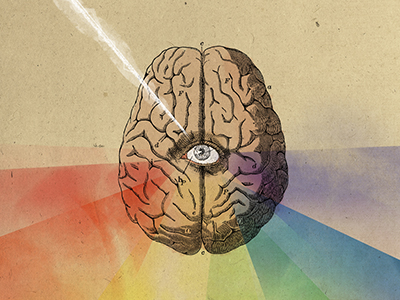
When Noë was writing his paper, the consensus opinion in the Philosophy of Perception had long been that experience is fully determined via neural processes, which occur primarily inside the head (Noë, 2006, pp. 411–412). This view is seductive, particularly when considering phenomena such as dreaming, hallucination and neurological diseases/disorders, all of which show perception as intertwined with brain state. Noë disagrees with this consensus opinion and aims to challenge the idea that these cases establish that all experience is head-sufficient, not merely most (2006, p. 412). Before expositing Noë’s argument, it is crucial to note that his strategy is phenomenological, rather than speculative neuroscience (2006, p. 412). This consensus opinion is known as “Internalism”.
Noë located the source of internalism in a mistaken snapshot conception of how perceptual experience operates (2006, pp. 412, 420). On this snapshot conception, perceptual experience is treated as a momentary, internally complete state, one in which the world is fully presented to the subject all at once, independent of any bodily movement or temporal unfolding. Noë argues this is “Bad Phenomenology”, as it fails to accurately describe how we ordinarily experience perception, which is usually partial, perspectival and dynamically structured over time (2006, pp. 421–422). Why does this matter for internalism? Well, once this snapshot is rejected, the inherent motivation for an internalist explanation is weakened substantially, since the demand for a richly detailed internal representation no longer follows from the actual phenomenology it intended to explain (2006, pp. 420–422).
Noë’s central phenomenon is what he calls perceptual presence: the idea that objects are experienced as fully present to us, even though we are perceptually aware of only a few of their aspects at any given moment of perception (2006, pp. 413–414). This sense of presence is not the result of an explicit inference, belief, imagination, or any of the sort. It is built directly into the structure of the experience of perception itself. When I see a table, I view it as having unseen sides, hidden surfaces. And further details that are not currently sensed, such as the back of the drawers against the desk, but I experience those as present without any clear observation. Therefore, an adequate account of perception ought to account for this distinctive structure of experience, in which absence and presence are intertwined rather than opposed (Noë, 2006, pp. 414–416). In essence, he is arguing that felt richness does not equal internally stored detail, and there is some level of mismatch between our experiential perception and empirical reality (2006, pp. 420–423).
The central goal of this is that perceptual presence consists not in the possession of a detailed internal representation of objects, but rather in practical access to the environment (2006, pp. 423–424). I am always able to look behind the table and see the drawers if necessary. Objects are present if further details can be obtained through bodily movement and interaction. Unseen aspects of objects in our field of view are present because we, as the perceiver, understand how to bring those aspects into view by changing our position or orientation, such as peering behind the desk to see the drawers. This understanding is not propositional knowledge about how the world is represented internally, but rather a form of skill-based acquired knowledge, which is referred to as “knowing how”, over “knowing that” (2006, pp. 423, 426). Noë is not positing some a priori sense of the mathematical and physical dimensions of objects, but rather a skill-based, learnt conception of how objects work and appear. In this sense, perceptual presence does not cause the mind to internally “fill in” any missing details, but the world itself is the source of perceptual richness, structured by the perceiver’s sensorimotor and bodily capacities (2006, pp. 427–430).
Noë strategically uses empirical pressure to add to his phenomenal argument, utilising the notion of change blindness (2006, pp. 420–422). This phenomenon is where observers view a scene, a large, obvious change occurs (an object disappears, a core colour changes, etc.), and subjects fail to notice this unless their attention is specifically directed toward it. Noë emphasises that this dissociation between felt richness and representational completeness suggests that perceptual experience does not consist exclusively in the internal encoding of detailed scene representations. Instead, this apparent richness of experience is best seen as arising from the availability of the world as a structured field of possible exploration, rather than from the internal encoding or a priori conception of details within our perception (2006, pp. 421–423).
All in all, this analysis leads to a distinctive enactive conception of how perception operates, according to which perceptual experience is a temporally extended activity instead of a momentary, inner state (2006, pp. 426–428). On this view, perceptual experience is grounded in the skilled probing of one’s environment, where experience can unfold through ongoing sensorimotor engagement rather than just passive stimulation. Perceptual experience is not something that mysteriously occurs inside of us, but something we actively do in virtue of our embodied capacities, and the relationship between our mind and sensorimotor faculties. If perception can be successfully constituted by such world-involving activity, then externalism about the processes of experience becomes a live and principled option rather than a grandiose metaphysical claim (2006, pp. 429–431).
This same enactive picture is echoed throughout philosophical and cognitive scientific research of embodied cognition, However, this framework is not without faults. A strong internalist objection must grant much of Noë’s framework, but deny its externalist conclusion, arguing that sensorimotor contingencies can, in principle, be fully encoded within the brain (2006, pp. 427–430). If such contingencies are internally represented, then identical brain states should suffice to guarantee identical perceptual experiences, regardless of the subject’s actual environment. On this view, the world plays a merely causal role, becoming explanatorily redundant once the relevant internal states are fixed. But importantly, this objection does not reject the emphasis on sensorimotor structure or practical knowledge, rather insisting these features are realised entirely within the head.
Noë’s response to this is deliberately modest: he does not deny that this theory is possible but argues that internalist supervenience is not successfully established via this argument (2006, pp. 429–430). Rather, whether the brain alone can enact this kind of perceptual access remains an open empirical question and metaphysical debate, rather than a settled consensus. This methodological openness motivates Philosophers of Mind to take enactive explanations seriously, particularly in cases where perceptual presence does appear to depend on patterns of embodied interaction, rather than internal processing. Even if sensorimotor contingencies could, in principle, be neurally encoded, Noë’s account explains perception in terms of the world’s availability as a place of actionable opportunities; internal encoding would merely describe a capacity at best, not constitute its exercise.
In the following sections, I adopt Noë’s framework to analyse the phenomenology, appeal, and incessant nostalgia toward Minecraft, arguing that its distinctive sense of perceptual presence is best explained in terms of practical access and embodied engagement rather than representational richness (2006, pp. 423, 429–431). I argue that Noë’s framework best explains the cultural status and the unique emotions the game produces.
3. Phenomenology of Minecraft
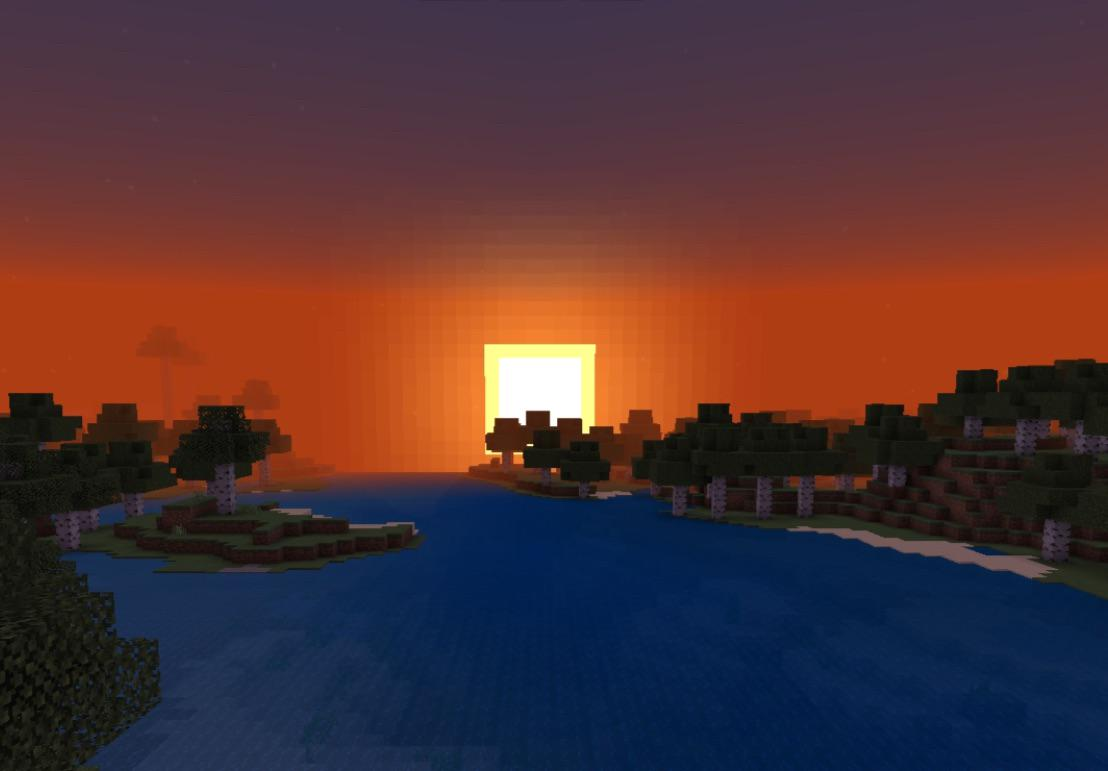
The initial feel of Minecraft is one of the primary reasons players cannot escape it. Players are loaded into an overly simplistic, slow, empty canvas sandbox world, with no gear and equipment. Nothing demands attention; the world is not abrasive or loud; it simply exists. This feeling of freedom is one of the more fundamentally nostalgic parts of the game, knowing that you can mould this piece of land to whatever you like: A medieval castle, a modern city, a quaint cottage with a farm, the creativity is yours. Unlike games which hold your hand, Minecraft allows sensory experience to exist as education.
Philosophically, what makes the experience of Minecraft so fundamentally nostalgic is the sensory engagement of video games. When a player is enmeshed in this world, they are not only witnessing the uniquely simple art style, but they are also hearing the soft, melancholic lulls of C418's renowned soundtrack and focusing on the subtle pushes of the keyboard and controller, which they use to navigate this terrain. Minecraft utilises silence to provoke the player's mood. C418's melancholic is not a constant feature; it is intermittent, encouraging a sudden burst of concentration, motivating you to mine, build, and concentrate, then snapping out. These silences are often cited by players as cues to reflect (AnyAustin, 2024, YouTube). Minecraft, as a game, does not require constant focus; unlike most video games, which have loud music, pop-ups, and constant attention retaining techniques, Minecraft idealises monotony. The things you usually do, mining, building, fortifying, and travelling, are tasks often associated with work. So, it is natural for the player to drift, reflect on love, friendship, life, stress, all while releasing all those anxieties within the beauty and rhythm of the game.
Minecraft is best viewed as a case study in embodied cognition, music, sounds, uniform blocky textures, and the physical inputs needed to strike your paintbrush on its canvas. It is about unifying body, mind, and world. This is particularly why Minecraft is relevant to discussions in embodied cognition, many of the game's functions, such as Redstone (which functions as the electricity in the game), require an understanding of Boolean logic, several different factors and components, which make them mini programming projects. Minecraft is a game that is unique in the fact that it engages all parts of our embodied cognitive processes, which is why it is so hard to move on from.
All these factors combine to create a sense of “home” in this digital landscape. It is not uncommon for both children and adults to become overly attached to the worlds they create. This is because every world is handcrafted in the ways laid out above, but also because it enlists spatial memory without explicit recall. Every player can walk across their world and remember the exact moments they built each structure, what was going on in their lives, and how they felt in the moment. This can be seen as a form of dwelling, returnability, and ease.
These features—rhythmic action, perceptual sufficiency, and environmental familiarity—suggest that the distinctive character of Minecraft experience cannot be explained solely in terms of internal representations or stored memories. Instead, the world is experienced as present and meaningful through the player’s ongoing capacity to act within it.
4. Minecraft as an Enactive, Scaffolded Cognitive World.
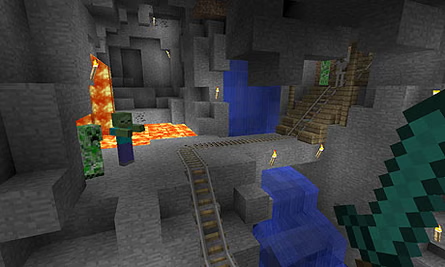
Noë explains why Minecraft is particularly appealing to its players: an active, cognitive world which is surrounded by embodied faculties, sensorimotor agency, and a creative world based on skill-based learning (Noë, 2006, pp. 427–431). However, to properly articulate why Minecraft is such a feat of human technology, we must introduce Andy Clark’s argument in Being There – Putting Brain, Body, and World Together Again (Clark, 1997). Clark’s core claim is that cognition is not confined to the head but is distributed across the brain, body, and environment (Clark, 1997, pp. 46–47). His framework helps understand why players can uniquely think, learn, and reason within Minecraft. To Clark, cognition is rather a controller than a mirror (Clark, 1997, pp. 47–51). It acts within our usage of tools, cognitive processes and intellectual functions.
Clark argues that intelligent agents actively restructure their environments to reduce cognitive loads (Clark, 1997, p. 150). Within this, cognition is most efficient when problem-solving is distributed across the three facets of brain, body, and world (Clark, 1997, pp. 46–47). Within his framework, environments function as cognitive scaffolds, not mere backdrops or assets to an ultimately mental world (Clark, 1997, pp. 60–66). Minecraft, by design, is created to be reshaped, rearranged, reorganised, and essentially created for the player. Unlike other games, where you have a set world, you can explore, do quests, or do things within the rights provided to you by the developers; Minecraft enables a sense of cognitive freedom, an environment which is a medium for thought, action, and creativity rather than static scenery. Players solve problems in the world, not merely about the world (Clark, 1997, pp. 60–66). Terrain is mined, flattened, elevated, and rerouted. Players simplify spatial problems, measure their builds, reroute rivers, build massive, enthralling creations, embodying Clark’s idea that intelligence often consists of changing the task environment rather than increasing a sense of internal computation (Clark, 1997, pp. 64–66). In Minecraft, the world is rendered in “chunks”, which are 16x16 blocks of land with their own independent spawn rates and development. This allows for a grid mechanic and simple mathematics when building. Spatial calculation, alignment, proportional reasoning, and precise manipulation turn the world into an external computational framework, reducing the need for internal spatial modelling. Minecraft is so immersive not because it simulates reality with high fidelity, but because it provides a stable, manipulable environment in which cognition can successfully unfold through direct action (Clark, 1997, pp. 47–51).
Most games have a built-in HUD, map, and quest markers to direct the player to points of interest. Minecraft Java Edition, by contrast, does not utilise any of these features; the player must use coordinates, memorise landmarks, routes, spatial relations between locations and create intricate transportation systems to navigate the infinite landscape. Players effectively must memorise where resources are, how to return home and which routes are safe. This memory is reinforced by repeated movement and tied to bodily action: while in any other game, you simply set a marker and go directly to the location via waypoint, Minecraft enacts an embodied sense of navigation, akin to memorising the drive home from work (Noë, 2006, pp. 427–429). This externalised spatial memory and place-based cognition mimics Clark’s notion of offloading; instead of maintaining a full mental map, players rely on environmental cues and build markers to unite Mind, Body, and World (Clark, 1997, pp. 60–66). Like Noë’s notion of skill-based learning: the player knows, practically, that there is always a way home—even if it is not obvious (Noë, 2006, pp. 427–431).
Perhaps the best example of this phenomenon is Minecraft’s system of electricity: Redstone, which turns the world into a literal site of embodied logic and experimentation. Redstone circuits instantiate Boolean logic, conditional relations, causal chains, and logic gates (AND, OR, NOT). Redstone has enabled players to make all sorts of creations: functioning automatic doors, automatic item sorters, castle gates, and, on the more extreme side, literal functioning computers, and the creation of an LLM within the game’s functions. The players reason by placing a wide array of components, with over 30 distinct items with their own purposes, observing outcomes, modifying structures and iterating designs. It is not mental stimulation (arrow) execution; if done right, Redstone functions as a trial-and-error mechanic, learning via practice (Clark, 1997, pp. 64–66). These logical relations are visible, audible, and spatially extended—errors are observable and correctable via action—the world performs part of the reasoning process (Clark, 1997, pp. 149–153). This is action-oriented representation at its finest, alongside skill-based perception, in which all the players' bodily functions are engaged in the cognitive processes (Noë, 2006, pp. 427–431). Without the sensorimotor factors of our bodies (sight, hearing, touch, and controls), the player could not learn redstone, reinforcing both Noë and Clark’s arguments (Noë, 2006, pp. 427–431; Clark, 1997, pp. 47–51). Redstone functions as epistemic actions: actions taken to make thinking easier, and the environment, plus sensorimotor processes, are doing the computational work, not an internal sense of awareness (Clark, 1997, p. 215).
5. Nostalgia as Body- and Place-Memory: Why Minecraft is so profound.
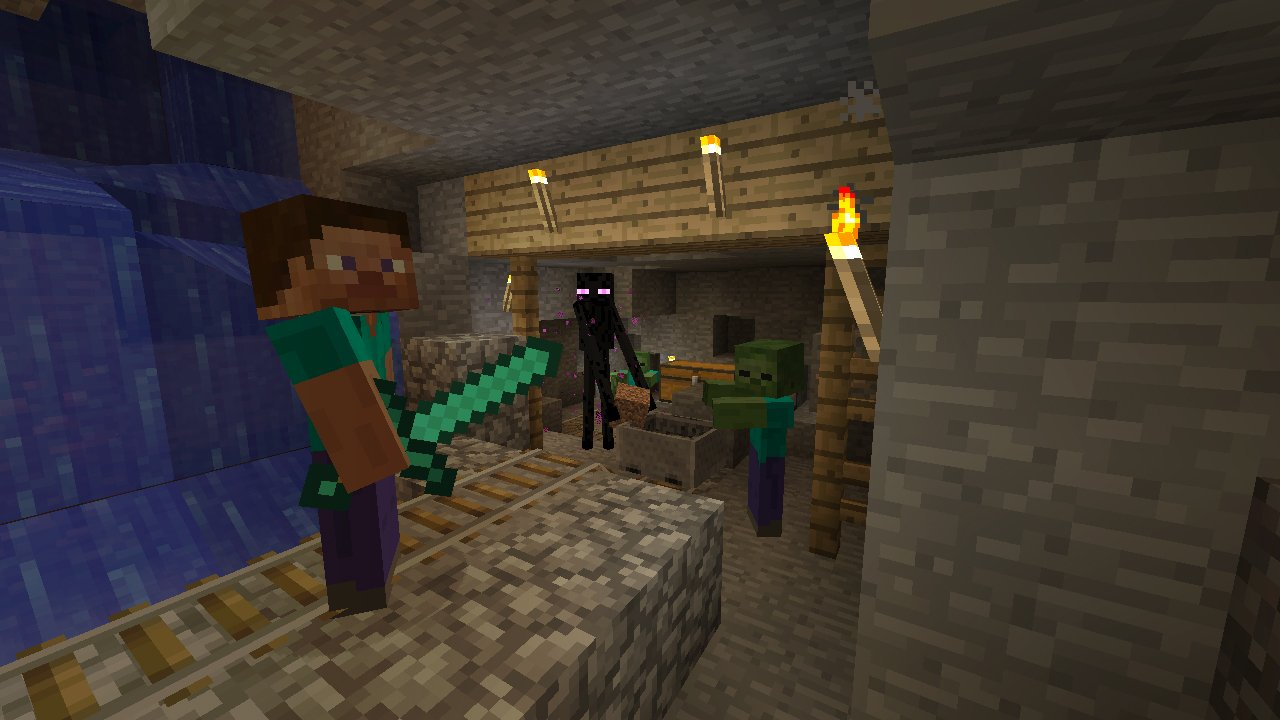
Now, why does this cognitive scaffolding matter, and what does it prove about the Philosophy of Perception, and by extension, memory? Unlike most games, Minecraft’s worlds persist indefinitely and retain the traces of past action. Builds remain untouched, routes, farms, and redstone systems remain functioning as time passes, and the world itself accumulates history. There is a sense of temporal extension and diachronic cognition in which the world exists as temporally scaffolded action. All the players' inputs are cognitively tied to a sense of time-passing and a home-like attachment to these digital worlds.
To extend onto Noë in this regard: if perceptual presence is grounded in access rather than representation, then it is natural to expect that some forms of remembering will be world-involving, not just internally stored (Noë, 2006, pp. 412–414). As previously established, what makes an object present in this framework is not what is currently sensed, but what can be brought into view through skilled bodily action (Noë, 2006, pp. 413–416). Casey’s notion of body memory provides a natural extension of this idea into the temporal domain (Casey, 2000, pp. 146–150). Body memory preserves patterns of access, without necessitating representational recall, mirroring the idea that perceptual presence does not solely depend on internally stored detail (Casey, 2000, pp. 148–150). With Minecraft, the memory which unfolds across the world is not just remembering what once was, but recovering the ability to act without deliberation, the idea that you have created this magnificent world. Nostalgia in this sense is the immediate recovery of access to a world that once again responds fluently to the player’s movements, not a mental image of childhood (Casey, 2000, pp. 148–150). Casey’s account of place memory supports this; place memory can be understood as the temporal analogue of perceptual presence: a place which remains experientially and cognitively present insofar as it can still be entered, navigated, and acted within (Casey, 2000, pp. 181–187). The lasting “just load up the world!” nature of Minecraft supports this notion, and this is further compounded by the wide array of YouTube videos on how to start your “Forever World”, one Minecraft world you play for years.
Minecraft is uniquely nostalgic, and this memory feels like being there, not remembering it. If nostalgia were merely representational, we would expect it to take the form of detached recollection, but Minecraft nostalgia is immersive and oriented toward action, consistent with Noë’s claim that presence arises through access rather than inner depiction (Noë, 2006, pp. 412–414). When video essayists discuss Minecraft, they do not say “I remember how fun it was”, they say “it felt like home”.
Bibliography:
Any Austin (2024) The Moment That Makes Minecraft Great. YouTube. Available at: https://www.youtube.com/watch?v=SeMXSW8-Z0M (Accessed: 19 January 2026).
Casey, E.S. (2000) Remembering: A Phenomenological Study. 2nd edn. Bloomington: Indiana University Press.
Clark, A. (1997) Being There: Putting Brain, Body, and World Together Again. Cambridge, MA: MIT Press.
fWhip (2025) How to START your Minecraft FOREVER WORLD. Youtube. Available at: https://www.youtube.com/watch?v=PvANyCQLnqY (Accessed: 19 January 2026).
Noë, A. (2006) ‘Experience without the Head’, in Gendler, T.S. and Hawthorne, J. (eds.) Perceptual Experience. Oxford: Oxford University Press, pp. 411–433.