A Life Between Departures.
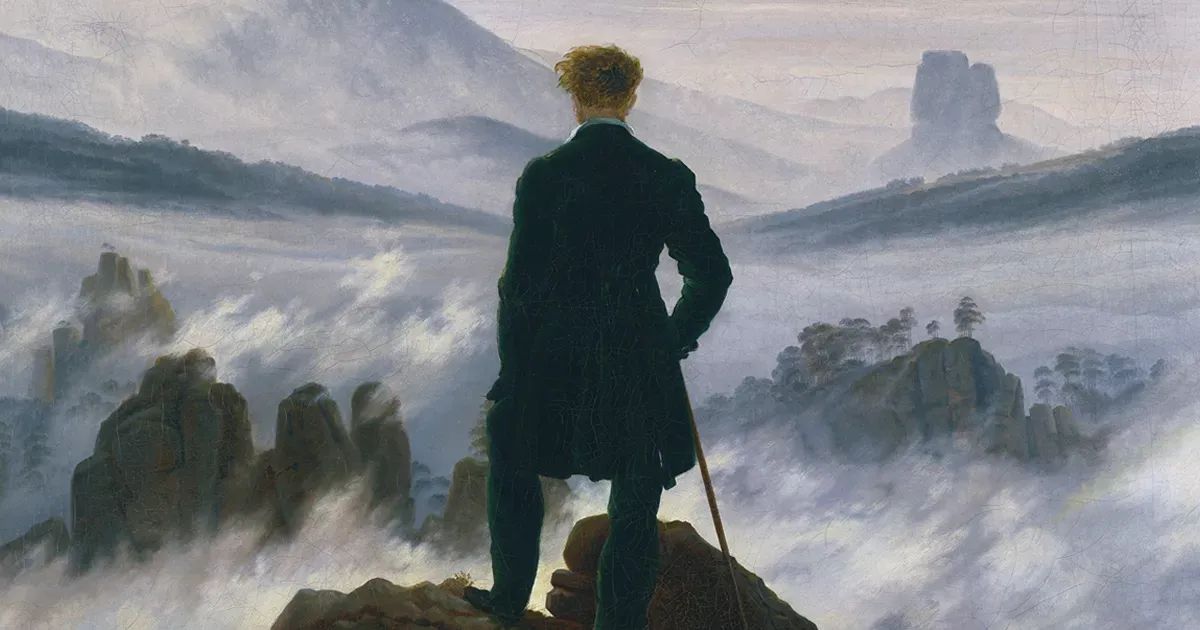
I often pack my bag and travel off to any desired location. No plan, no system, no logistics, just unadulterated adventure. Our society continuously sells us on one principle: security. Get a salaried job to guarantee your living, buy package insurance plans for every minute purchase we make, warranty on all our devices, and most devastatingly, a warranty on our souls. We are constantly told that a life well lived is one well secured; however, I have always intuitively felt the opposite. Within my spirit, I have always felt a yearning for true adventure. Wind in my hair, world at my feet, with all the risks acknowledged, considered, and ignored. In my case, this instinct is particularly “counter-phobic”; I naturally hold a high barrier of stress, I was instinctively resistant to change, and in love with habit. For reasons I will not disclose here, my sense of “security” began to diminish as I grew older, and in its place, I found an urge to not only live life meaningfully, but beautifully.
The idea of action has long been tackled by philosophers and essayists alike. As humans, we feel a great admiration for the most prolific adventurers in history. At every point in time, we might lament that there is nought left to discover, nought left to invent, it has all been “done already”. I need not explain how foolish this claim truly is, and this here is not an essay championing a philosophical thesis, but rather, a personal incentive, and a testament to my one greatest love—a sense of wandering. I believe most of us hold a deep-seated fear of solitude, as social animals, we regularly need even a little bit of companionship to ensure our sense of security and safety, most of us subconsciously run from our own company, whether through constant stimulation, music, videos, etc. to not hear our own thoughts, or in the literal sense of never doing anything alone. This is a great detriment to the development of our minds. I believe every single one of us has the capacity to contribute beautifully to many areas of human development and intellectualism, and the most fertile ground for that development is found in isolation.
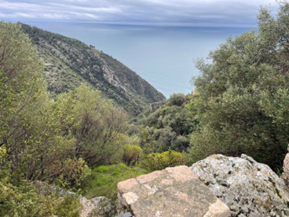
Friedrich Nietzsche found his inspiration for the third volume of the infamously prophetic Thus Spoke Zarathustra while wandering a steep, rocky trail across the French Riviera, an ascent to the medieval town of Èze-sur-Mer. [1]A close glance at the terrain he regularly crossed, described in his Ecce Homo as a “Most onerous ascent”, we can witness exactly how it inspired his seminal text. Nietzsche often wrote about the importance of action and movement for the philosopher. He was incredibly athletic and regularly hiked across Europe, often in perilous conditions. The entire tale of Zarathustra is based on these ascents (and descents). The book is prophetic in nature; Zarathustra descends from the mountain to preach to the common folk about ascension, the power of the human will, and the amor Fati[2]. Within this, the obvious idea of descending from an honourable pilgrimage mimics the inner workings of Nietzsche’s massively influential (and equally misunderstood) Übermensch[3], with the inspiration being rooted in lived experience. Of course, I am not making an argument that good philosophical work requires a lived experience[4], I am rather calling back to the ancient principle of Philosophy as a way of life. The majority of my most profound experiences and intellectual revelations were found in solitude. In fact, I am writing this essay on the train, returning from impulsively wandering the cobbled streets of Cambridge, to connect with my latest inspirations: Russel and Wittgenstein. I find profound importance in the ability to isolate oneself, remove distraction, and immerse oneself in the immediate sensations around them.
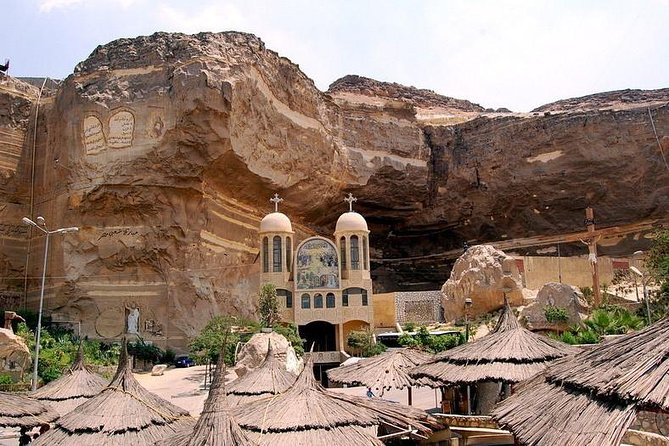
I find incredible inspiration in a sense of meaningful adventure. I have undertaken many journeys, most of whom in the last year or so, to enlighten my philosophical prowess and develop as both a writer and a thinker. The most important of which was my travels to my native Egypt in June. In which I had the privilege of many great adventures I shall cherish for the rest of my life, however, most notably (and unforgettably) was a drive up top of El Mokattam, to visit the St. Simon, the Tanner Monastery. A most curious “pilgrimage” this was, to marvel at one of the greatest churches in the entire Middle East, one must travel through the famed “Garbage City”, occupied by the city's famous Zabbaleen. An assortment of citizens from an impoverished part of the city, who made their fortune from processing the city's abundance of garbage and selling recycled cans back to massive corporations at a discount in comparison to local manufacturers.
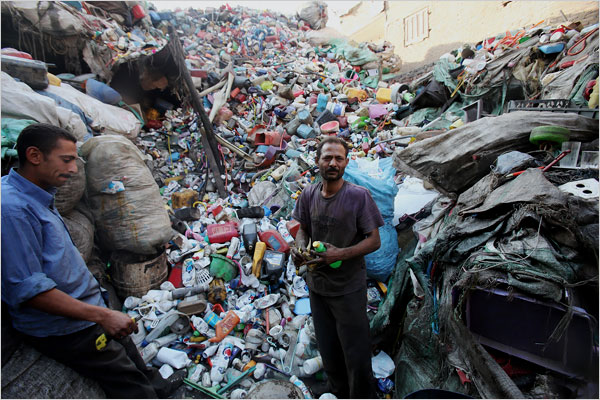
Here I’d like to call upon observation, rather than criticism. This region is perhaps the most juxtaposed place I have ever witnessed. To reach a clean monastery and a city in worship of Jesus Christ, one akin to old descriptions of Bethlehem, I had to witness living conditions so horrendous that I could not bear to breathe the coarse, polluted air for more than a few minutes at a time. The contrast of the pain (bracketing the benefit of the abundance of garbage), the local children had in their faces, eyes watering, lungs clogged with more chemicals than any of us in the West will ever have to inhale, with the innocent, radiant beauty of a monastery. The Zabbaleen are adored by the local Copts; they are considered excellent people, and their hospitality corroborated this sentiment. But this journey had me—an atheist—reconsidering my own judgements of faith. I always say God as a “useful fiction”, something to ease the comfort of meaninglessness, something no one truly rational could ever fully believe in. But as I walked through the monastery, I saw the pictures of the local priests who dedicated their entire livelihood to building this place from the ground up, and I felt in the deepest parts of my consciousness, my own ignorance. No, I did not become religious after this trip, nor did I question it at all. What changed was my respect for piety, a transformation which would not have been possible, had I not stepped out of my comfort zone.
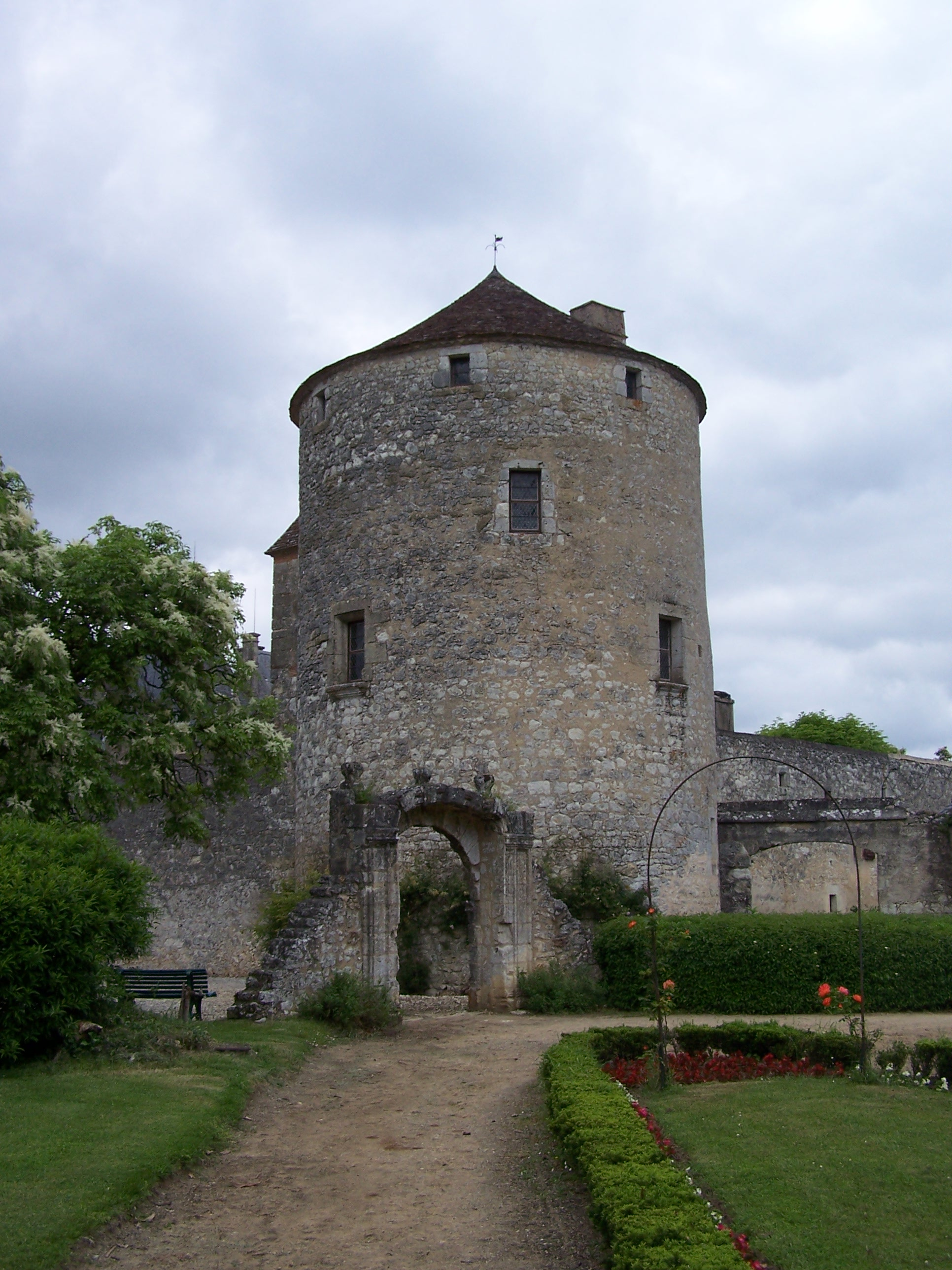
Michel de Montaigne regularly travelled across Europe on his own[5]; his philosophical investigations did not occur through criticism or motivated by a notion to find some arbitrary best way to live. He was an observer; he paid close attention to local customs of each region he visited, noting food differences, medical practices, and legal traditions. Montaigne was not a romantic traveller in the same sense Nietzsche was; he did not feel an imperative to find beauty in the world as an antidote to his suffering in the way the German Philosopher describes. He floated simply to observe the differences and interrogate otherwise “menial” topics of life: Solitude, friendship, sadness, etc. But most importantly, whenever he returned from his travels, he would isolate himself in his tower. Lining its cobbled beams with Greek and Latin maxims, not to escape from the world, but to reconfigure his understanding of it. Montaigne helps show us that good thinking requires spatial-temporal change to stimulate revelations across many topics. The importance of solitude is undeniable for a good thinker, to immerse yourself in literature, to allow your mind to race, to feel crazed and even intimidated by the capacities of your mind: these are the virtues of the idyllic philosopher.
Similarly, the act of wandering need not be limited to adventure and new experiences, while challenge and physical exertion are of great benefit to the philosopher, there is nothing wrong with sentiment or a feeling of “home” by any means necessary. Albert Camus’ Return to Tipasa illustrates a similarly beautiful story. Camus writes about his first return to Algeria since the outbreak of the Second World War. In a beautifully melancholic journey through his feelings on death, solitude, Camus recites his fond memories of his youth under the beaming Algerian sun. He concludes the essay with one of the most moving passages on death, and meaning I have ever read:
“I try to forget, I march through our cities of iron and fire, I smile bravely at the night, I welcome the storms, I will be faithful. In fact, I have forgotten: henceforth, I shall be deaf and active. But perhaps one day, when we are ready to die of ignorance and exhaustion, I shall be able to renounce our shrieking tombs, to go and lie down in the valley, under the unchanging light, and learn for one last time what I know.”[6]
A home is not an obstacle to good philosophical development—quite the contrary, a home, coupled with a venerable sense of adventure, is the best combination for fruitful philosophical development and discourse. I recently walked through my childhood area; I was brought up in the famous Hampstead in Northwest London, I carry a fond admiration for the area; tied closely to nostalgia and elements from my childhood—perhaps as a time a felt more “free” or “innocent”—this idea of home; even a non-standard one has fuelled many of my philosophical revelations. I sat just two days ago, sleep-deprived in my usual fashion, in front of my old middle school. There I meditated on a phenomenon to do with building monuments in our minds, spatiotemporally isolated worlds in which we revisit, reminisce and dream upon. This, for me, has taken many forms: nostalgic Minecraft memories, my old flat, people no longer in my life, and so forth.
I sat there for a while, breathed, and then returned to my wandering.
[1] This trail has now been affectionately renamed as the Chemin de Nietzsche!
[2] Love of fate/acceptance of a lack of inherent meaning and existential existence.
[3] Not to be confused with the Nazi rebranding of the term. Nietzsche’s Overman was meant to represent comfort with the unknown, and the willingness to make something of one’s futile existence (put short). It does not entail any notions of racial superiority, or eugenical purity.
[4] The obvious remark of Immanuel Kant who never left his native Königsberg, though similarly: Gottlob Frege was incredibly sedentary, and of course influential in formal logic and the foundations of mathematics (Ironically the well-travelled Russel would decimate his contributions mere decades later, but I cannot ground proficiency in Logic and Mathematics in travel without making an incredibly fallacious leap in argumentation.)
[5] See “Travel Journal” by Montaigne, translated by D.M. Frame to read more about his travels, I highly suggest that you do!
[6] The “Invincible summer” line is the most famous part of Return to Tipasa; however, it is incredibly short and utterly beautiful. It is hard to find it on its own, but it is included in the Penguin Archive’s “A Short Guide to towns without a past”, alongside similarly moving essays of the late Frenchman.